
Agency owners keep asking me a version of the same question: why pay for a custom AI system when a $99 a month tool claims to do the job. My honest answer is that if the $99 tool genuinely replaces the workflow, they should buy the tool. The build or buy decision for your AI marketing agent only becomes interesting when it does not, and past a certain agency size it usually does not.
This is the framework we use, built from systems we have shipped, the parts that broke in production, and the sales calls where the right answer was a subscription.
Should you build or buy your AI marketing agent?
Buy when existing software removes 80 to 90 percent of the workflow. Build when a standardized, repetitive workflow still consumes 20 or more hours a week that no product eliminates. Most agencies land on a hybrid: buy the commodity capability, then custom-build the agency-specific data logic, validation, and approval process around it.
That is the compressed version. The hard part is knowing which situation you are in.
The person making this call is usually a founder, COO, or head of operations at a 10 to 50 person marketing agency. The team already uses ChatGPT, Claude, and the AI features inside the marketing stack, yet account managers still pull numbers from Google Ads, Meta, GA4, and the CRM by hand. Someone still turns those numbers into client commentary. Senior people still lose hours to reporting and campaign QA.
Then two pitches arrive in the same week. A vendor says pay a subscription and our AI agent handles this. An automation company says we can build this around your exact workflow. The founder is left weighing an asset against a maintenance problem.
The real question underneath is sharper than build versus buy. What should we buy, and which part of our operating process is valuable enough to own?
The comparison most agencies get wrong
The instinct is to weigh the $99 subscription against the price of a custom implementation. That compares a software price against an implementation price, and it tells you almost nothing. The useful comparison is the total cost of the workflow before and after each option.
Take a common reporting workflow. Pull data from Google Ads, Meta, Shopify, and the CRM. Reconcile the numbers. Calculate agency-specific KPIs. Spot anomalies. Compare periods. Work out why performance moved. Write commentary. Apply client-specific rules. Format the report. Have an account manager check it. Send it.
If a tool eliminates that whole chain reliably, buy it. If it eliminates two steps out of twelve, the remaining ten steps are the real cost, and the subscription price is a rounding error next to them. A product can cover 80 percent of your feature checklist and remove 25 percent of your labor. Feature coverage and labor removed are different measurements, and only the second one pays salaries.
Say five account managers collectively spend 40 hours a week on reporting, and automation brings it to 5. That is 35 hours a week recovered, or 1,820 hours a year. At a fully loaded cost of just $30 an hour, that is $54,600 a year in capacity. Set that against the quoted implementation and running costs. I want payback in months. When the model says years, I walk away.
The same math regularly points the other way. AgencyAnalytics charges $20 per client per month billed annually, so a 25-client agency pays about $500 a month for reporting. If that takes the team from 40 hours a week down to 8 and the output fits, commissioning a custom reporting platform is a waste of money. I broke down the build vs buy math for agency reporting specifically because reporting is where this question shows up most often.
What building and auditing these systems taught me
Start with an example of what we could build, not a finished client project: a weekly reporting agent for a digital marketing agency running 25 client accounts, pulling Meta, TikTok, Shopify, and CRM data. The agent drafts each report and an account manager reviews it before it goes out. It is the same pattern as our client reporting autopilot.
For a marketing agency in Charlotte, we audited AI employees in Slack that another developer built. We logged 127 findings across access, approvals, memory, alerts, and cost. One was memory organized by channel, not by which client each person was allowed to see. The rebuild is in progress, so there are no results to report yet.
A second example of what we could build: restaurant performance reporting for an agency with restaurant clients. Nobody has to disappear. The account managers would move from gathering and formatting information to actually working with clients and restaurant partners. Custom systems replace work. They do not automatically replace jobs.
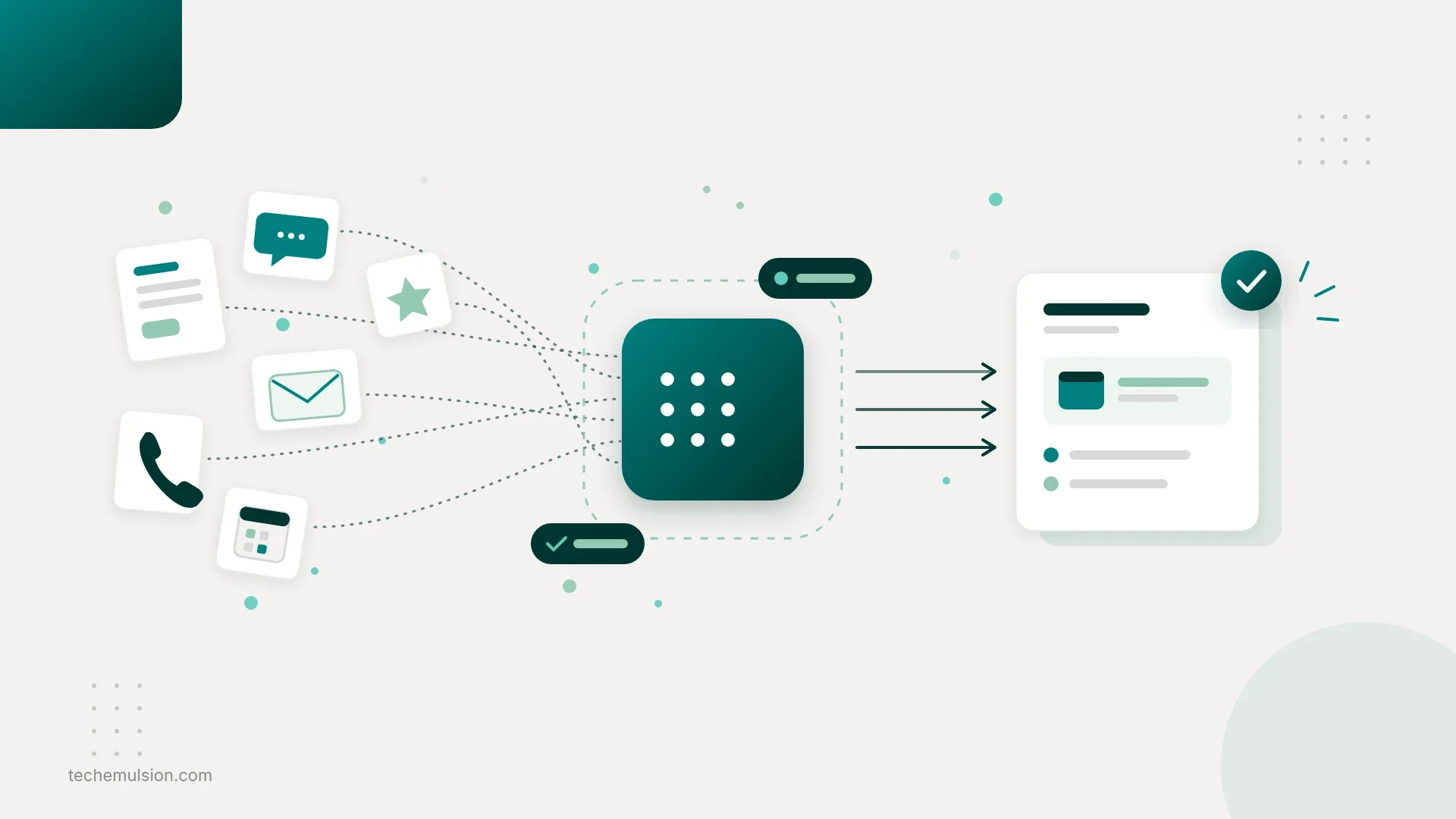
The lesson that shapes our architecture: early versions of a reporting agent look impressive in demos and fall apart on real accounts, because clients name campaigns differently, fields go missing, and APIs return incomplete data. The worst possible design is raw platform data straight into the model and out to a client. A good language model makes bad data more dangerous, because the wrong conclusion sounds professional. So the pipeline is API data, then normalization, then deterministic KPI calculations, then validation, then Claude for interpretation, then human approval. When required data is missing, the run stops, logs the failure, and alerts a person. It never improvises.
The four gates: volume, standardization, uniqueness, economics
When a prospect brings me a workflow, I run it past four gates. Failing any one of them changes the recommendation.
How much labor does the workflow consume?
I want hours per week, and vague answers like reporting takes forever do not count. A workflow eating 2 to 3 hours a week rarely justifies custom development unless it directly touches revenue or risk. At 20, 30, or 40 plus hours a week, custom deserves serious investigation.
How often does the exact same workflow repeat?
For standard reporting, under roughly 8 to 10 clients I lean toward buying or lightweight automation. Between 10 and 20 clients, hybrid gets interesting. At 20 to 30 or more recurring accounts, building becomes much easier to justify. Repetition matters more than raw client count. An agency with 12 clients on one identical process is a better automation candidate than an agency with 30 clients on 30 different processes. The single question I would ask about any workflow is how many times this exact task will run over the next 12 months.
Is the process standardized?
This gate is close to absolute. I ask to see how three different account managers perform the task. If all three do it differently, there is no automation problem yet. There is an operations problem. A unique workflow is not automatically a valuable workflow. Sometimes it is just five people's habits, and automating it fossilizes the inconsistency into software. The honest recommendation here is the fourth outcome most frameworks skip: do not automate yet.
Is the work commodity or differentiated, and do the economics clear?
I split every workflow into two buckets. Commodity work includes pulling ad platform data, sending notifications, storing records, scheduling runs, and basic dashboards. Buy all of it. Differentiated work includes agency-specific KPI calculations, unusual attribution rules, client-specific reporting logic, how your strategists diagnose underperformance, and cross-platform reconciliation. That chain is the asset worth owning. This gate is the workflow-level version of why AI apps get commoditized and AI systems do not.
Then the formula. Annual value equals hours removed per week, times 52, times fully loaded hourly cost. Compare that against implementation and running costs, and demand payback measured in months. A build that returns less in a year than it costs is a bad project. The same build removing several times its cost in repetitive work each year is an easy one. Risk sits in this gate too. The higher the consequence of a wrong output, the less autonomy the system gets, and if an existing product already has mature permissions, audit logs, and approvals, buying can beat rebuilding all of that yourself.
The tools worth evaluating before you call us
I would test these products before custom-building the same capability. We have not deployed every one for clients, so treat this as where I would start, with coverage limits drawn from the workflows we have automated ourselves.
- AgencyAnalytics for client reporting. It covers aggregation across the common marketing data sources, dashboards, white-label scheduled reports, and AI summaries. Coverage stops where your value lives in proprietary reconciliation and decision logic. A strong pattern keeps it as the presentation layer with a custom analysis layer underneath.
- Optmyzr for Google and Microsoft ads. Rules, audits, budget monitoring, and alerts are solved problems there, and encoding if-then strategies as rules beats giving a model free rein. It stops where the budget decision depends on CRM lead quality, inventory, or sales capacity outside the ad platform.
- Madgicx for Meta. Optimization rules, budget controls, and creative analysis already exist, so I would be reluctant to sell anyone an agent that pauses bad Meta ads. It stops where one decision spans Shopify margin, CRM lead quality, and cross-channel scaling rules at once.
- Jasper for content production. Brand voice, reusable pipelines, and multi-channel asset generation are covered. It stops when content is the final step of a longer chain of research, data pulls, client-specific rules, approvals, and publishing.
- HubSpot with Breeze for lead qualification. If the rules fit CRM fields, configure HubSpot and move on. It stops when qualification depends on data outside HubSpot, a proprietary scoring rubric, or checks across several systems.
The dividing rule: if your desired workflow fits comfortably inside the product's native data model, buy. When the important decision requires combining several systems with your own business rules, start thinking hybrid, which is most of our AI automation for marketing agencies work in practice.
Decompose the workflow before you decide
A reporting agent is never a single build-or-buy call. You buy the foundation model, the orchestration tool, and the database. You use the Google, Meta, and Shopify APIs as given. You build the normalization, the KPI calculations, the client rules, the validation, and the approval and failure handling. That is six things bought and one built. That one custom layer carries the agency's actual operating advantage, and building exactly that layer well is the core of our agentic AI engineering work. Break the workflow into layers and decide what to own at each one.
Who owns this six months from now?
The maintenance concern is legitimate, and I never sell custom AI as a one-and-done project. What breaks in production is rarely the AI. It is OAuth tokens expiring, ad platforms changing response structures, fields going null, scheduled jobs not firing, and an account manager quietly changing campaign naming conventions so the workflow classifies things wrong while every API call succeeds. Monitoring has to watch data quality and business assumptions, a layer I covered in AI ops and ownership.
Model deprecations worry prospects more than they should. In a layered system, the model is a replaceable component. We swap it by running the candidate against representative historical inputs, comparing output validity, classification decisions, commentary quality, and cost, then switching traffic once it passes. That is regression testing, routine engineering rather than a rebuild.
Ownership comes in three workable shapes. Internal, where your technical team takes over after deployment. A retainer, where the builder stays responsible for monitoring, dependency changes, and fixes. Hybrid, where your team runs the system and the builder handles escalations, the practical option for most 10 to 50 person agencies. Whichever you choose, insist on source code in your repositories, documented credentials and configuration, and monitoring your team can see. If only one developer understands the system, you own that developer's memory rather than a system.
Buying transfers maintenance to the vendor, and part of every subscription price is outsourced maintenance risk. Building keeps the control and the responsibility with you. When an agency wants custom but wants no owner, no maintenance budget, and has nobody technical, I tell them to buy SaaS.
Common questions about buying vs building AI marketing agents
Why can't my team just use ChatGPT or Claude?
They should. That still leaves the workflow unbuilt. A chat model helps a person interpret a report, and it will never fetch the right account data on its own, validate completeness, calculate metrics consistently, apply your business rules, or retry a failed API. The value sits in the workflow around the model.
Couldn't we build this in n8n or Zapier ourselves?
Yes, if someone internal has the skill and time to own it. The gap shows up months later when token refreshes, duplicate executions, missing fields, retries, and partial failures pile up. The tools hold up fine. The open question is who engineers and owns the failure states.
What happens if the AI model gets deprecated?
In a well-layered system, very little. The model sits behind an interface, so we regression-test a replacement against historical cases and switch when it passes.
Will a custom agent replace my account managers?
In the systems we design, it replaces their repetitive work: gathering, calculating, copying, formatting. Humans keep client context, exceptions, judgment, and approvals. I wrote a longer answer on whether AI agents can really replace your marketing team, and the healthier business case is how many more accounts the same team can handle.
How much does a custom AI marketing agent cost?
We quote a custom build after scoping, based on the workflow, the integrations and the review it needs. Judge the price against recovered hours. In the reporting example above, that capacity was worth about $54,600 a year.
How do I avoid getting locked into the developer?
Separate ownership from support. You should hold the source code, repositories, infrastructure, credentials, and documentation under your own accounts from day one. A retainer should exist because you want ongoing engineering, and for no other reason.
Get a buy, build, or wait answer before you spend
That is exactly what our Agency Automation Audit is for. We map what your team does manually, how often it runs, what it costs in hours, what existing products already cover, and which parts genuinely need custom logic. The output is one of four recommendations: buy, hybrid, build, or fix the process before automating anything. Sometimes the answer is a custom system. Sometimes it is a $99 subscription. You can see how we work with marketing agencies for what these engagements look like. When you want the audit, book a call and bring the workflow that annoys you most.