
AI content engine that nearly tripled social output
67% Less Time. Nearly 3x the Content.
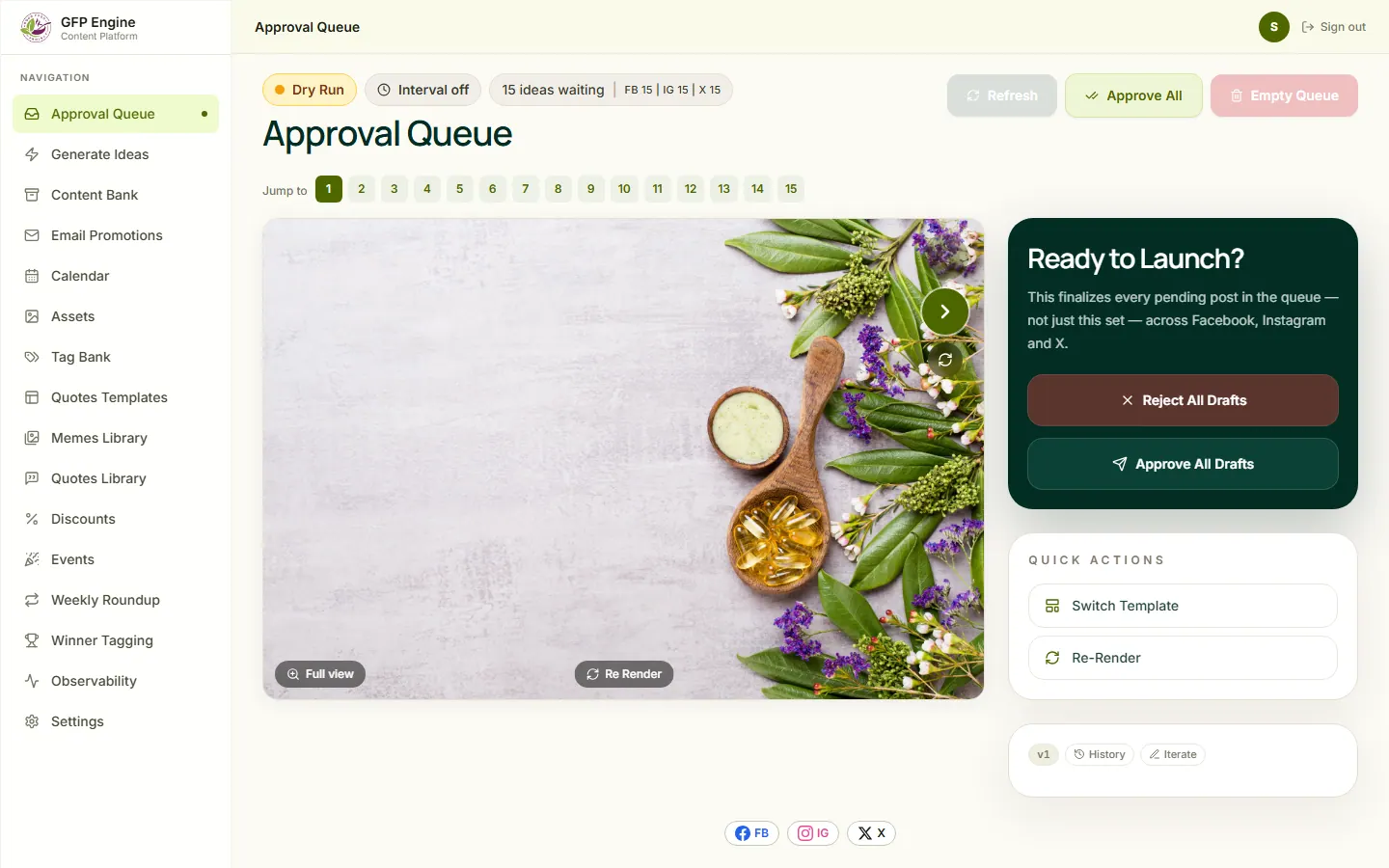
We built an AI-assisted social content engine for a DTC food and wellness brand. One brief becomes structured drafts for every platform. The system checks each draft against brand rules, a person approves every post, and Buffer publishes to Facebook, Instagram, and X.
Industry
DTC Food & Wellness
Client
Good Food Project
Engagement
AI-powered social content engine
Outcome
67% less time, nearly 3x the content
Tech Stack
AI drafting, approval queue, image verification, content calendar, asset and meme libraries
A look inside the live platform — scroll to explore →
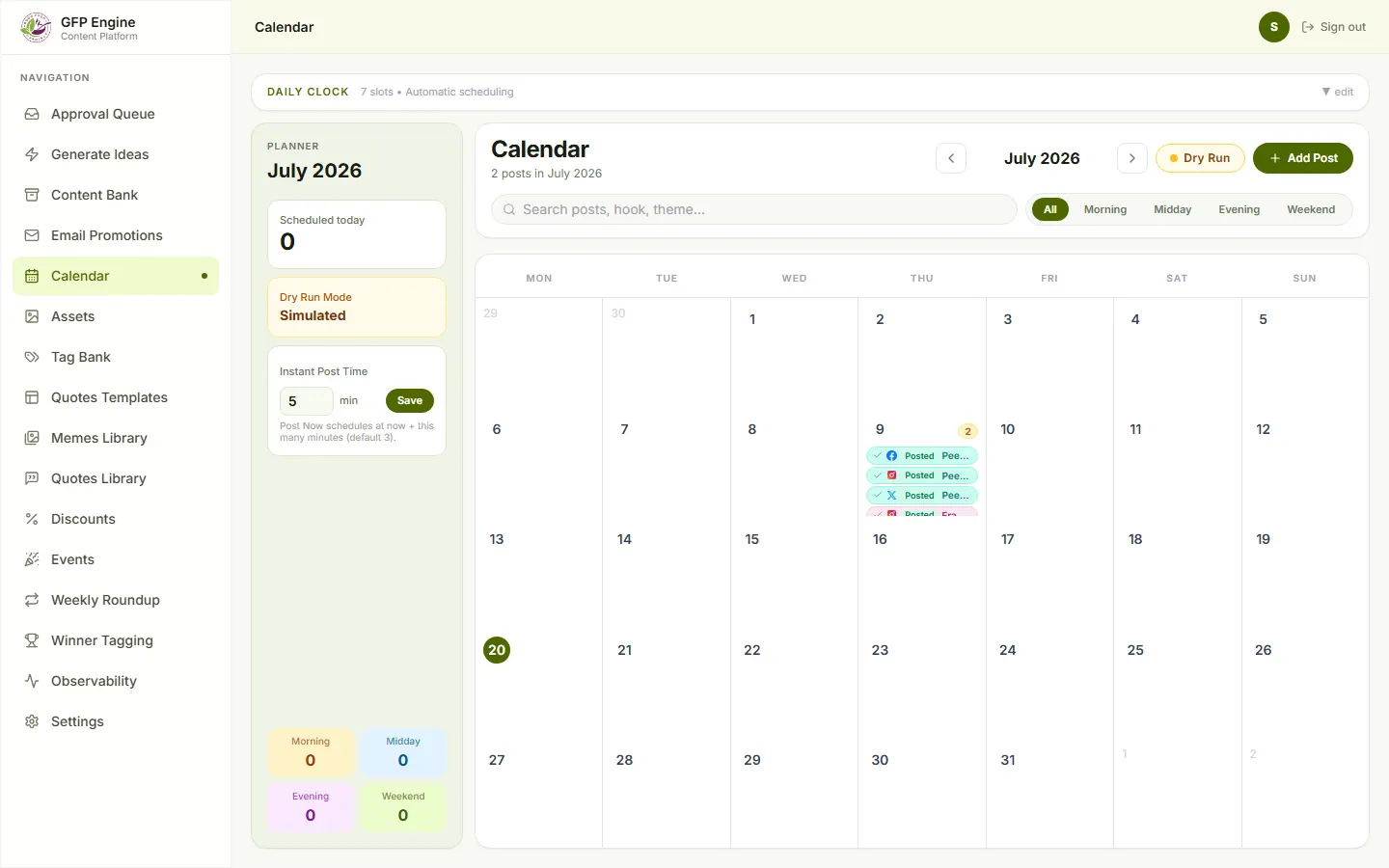
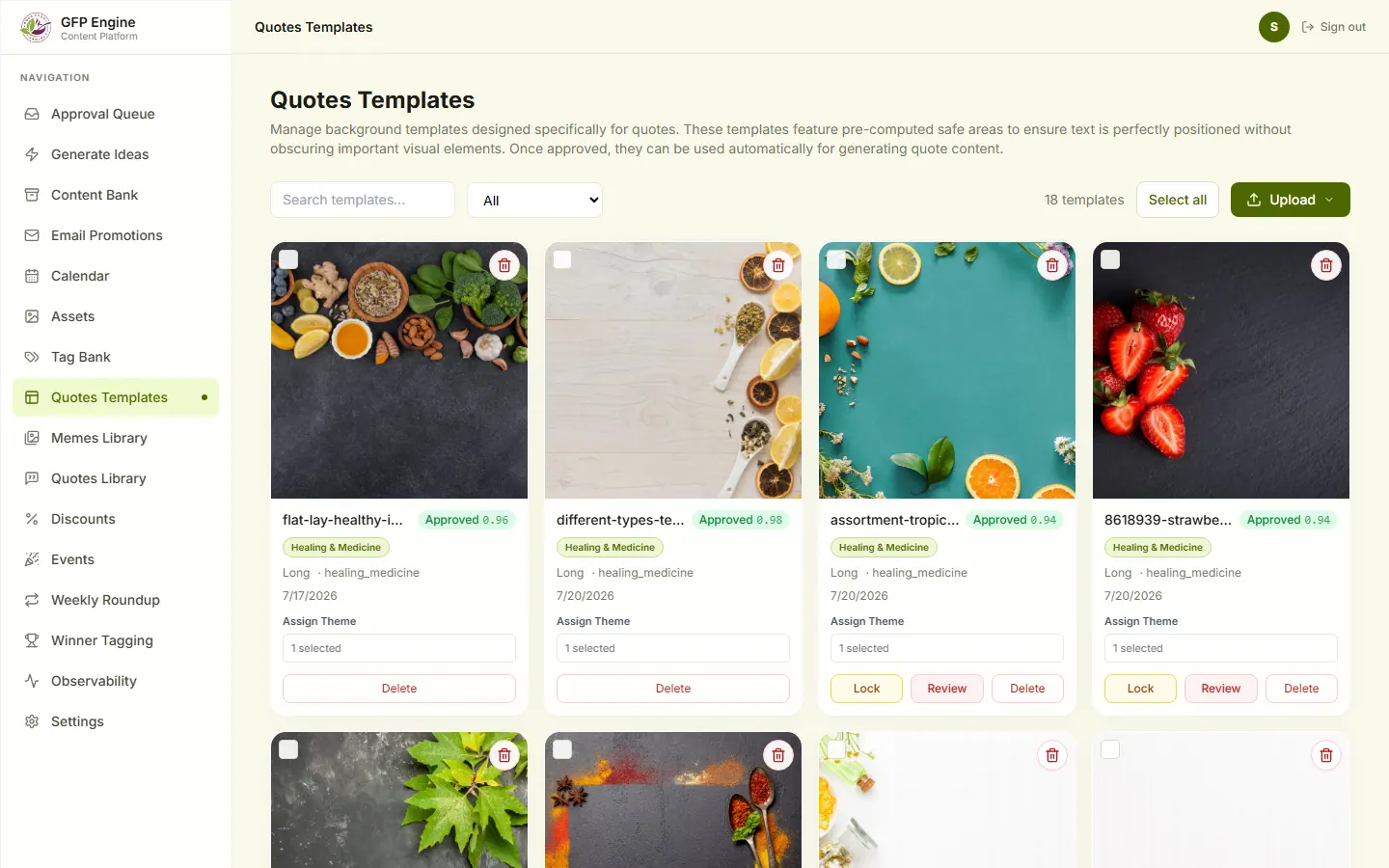
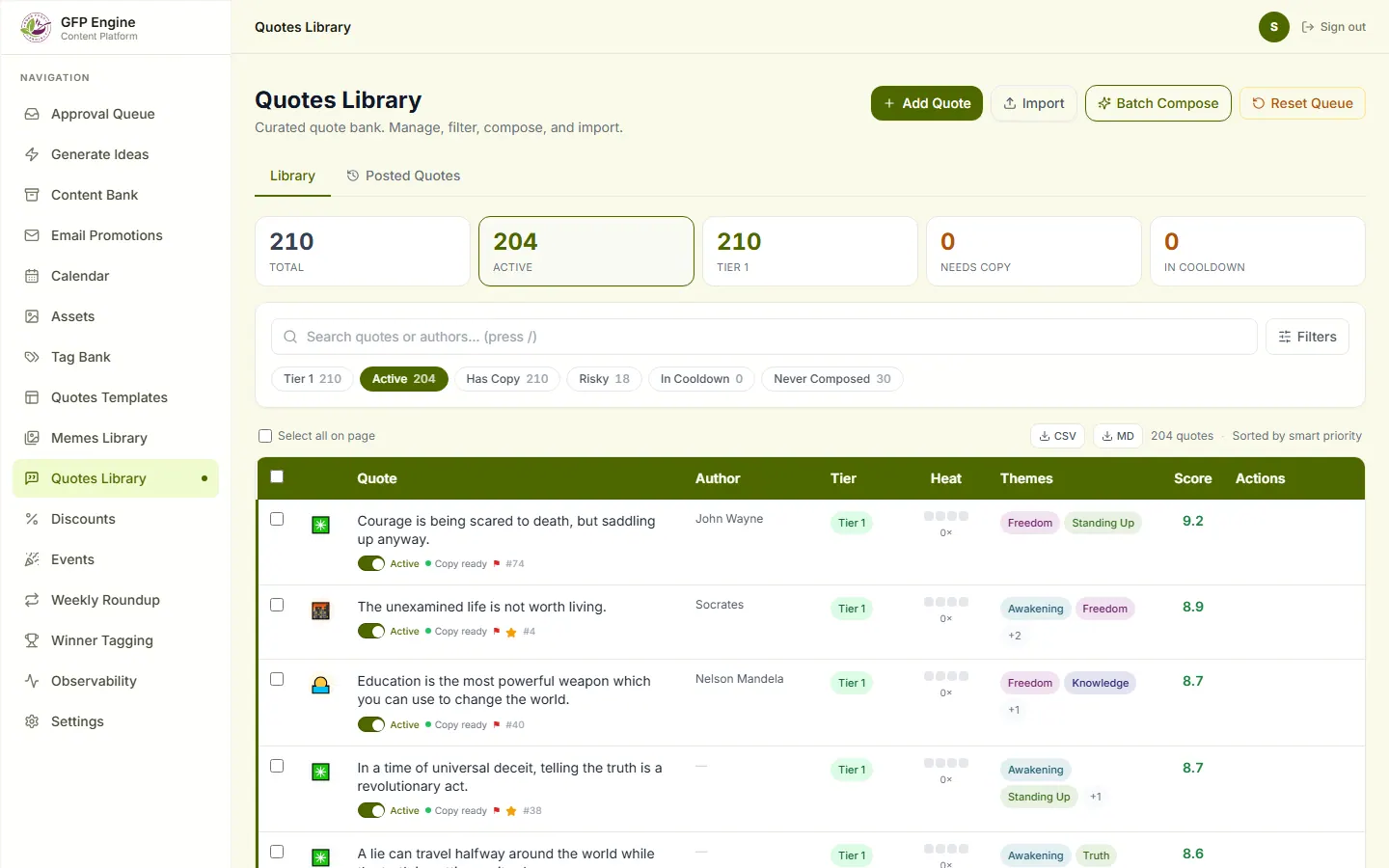
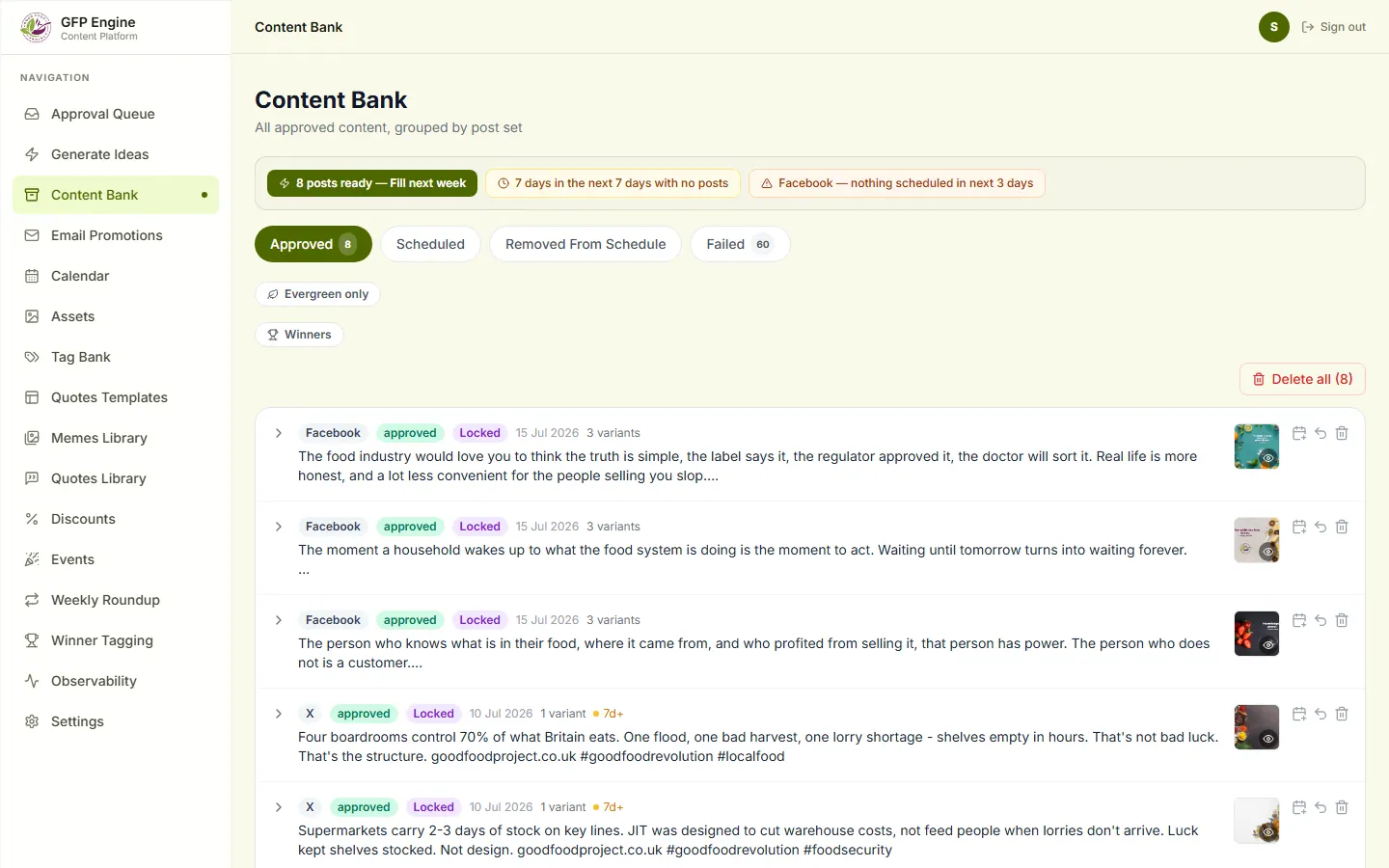
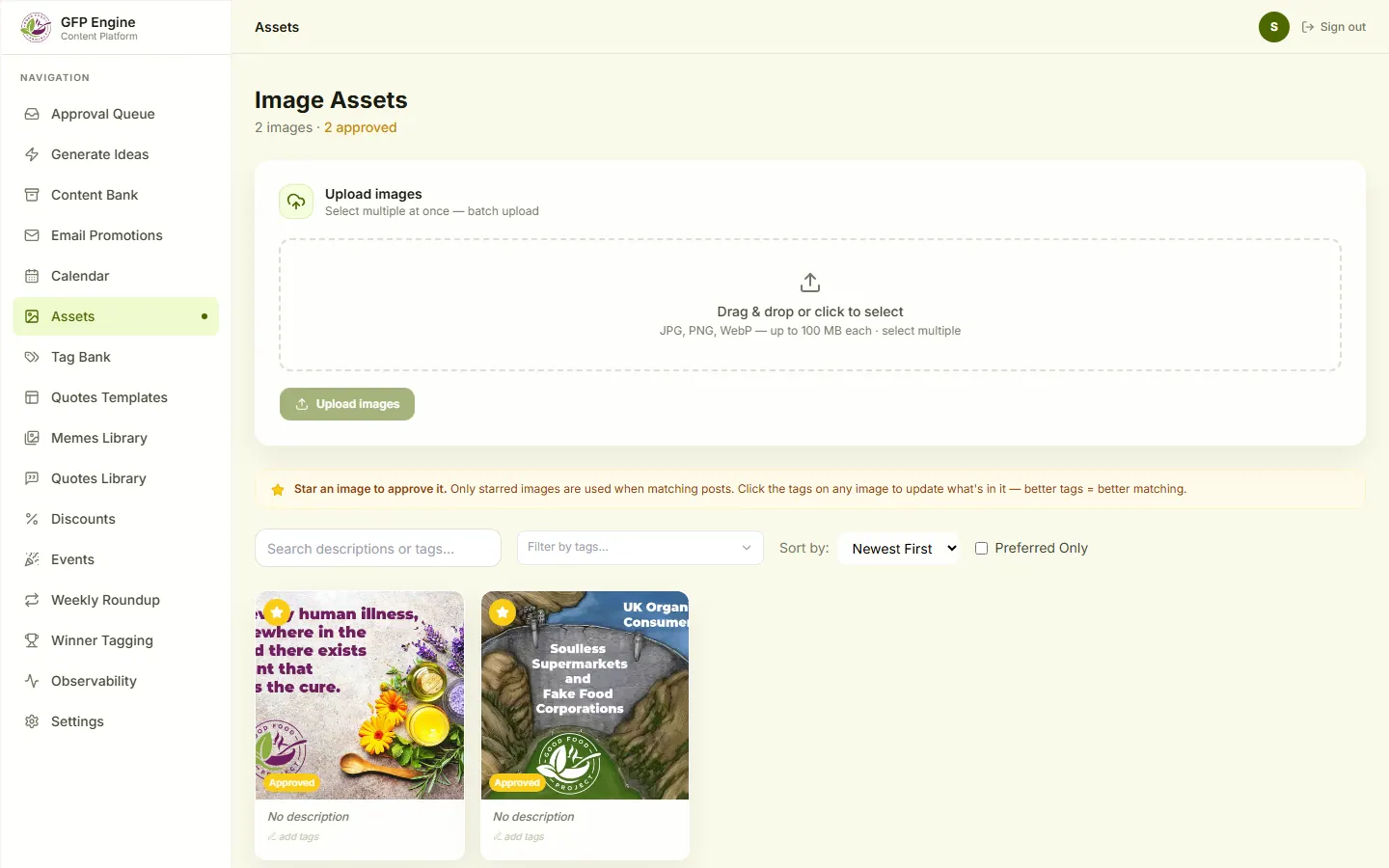
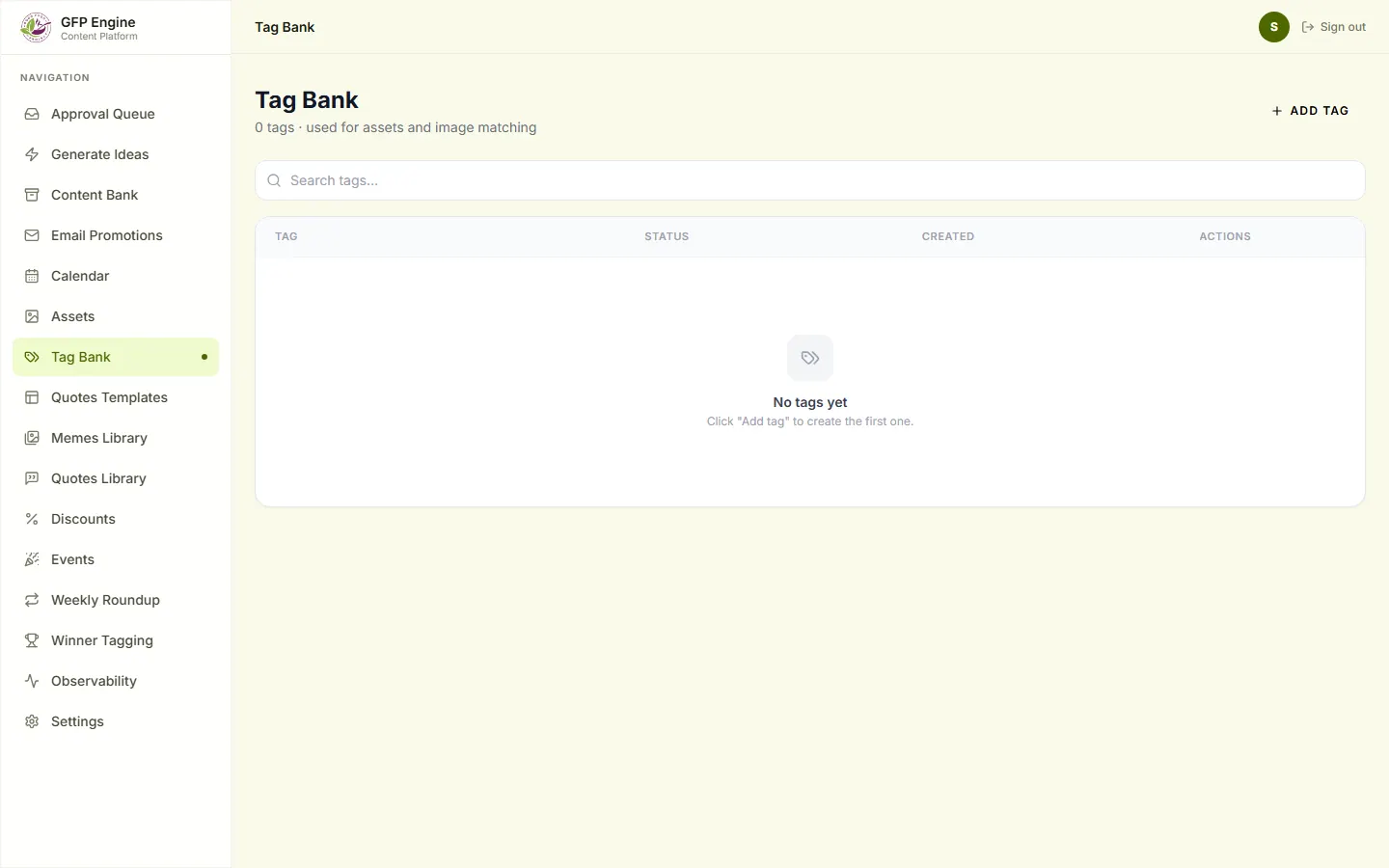
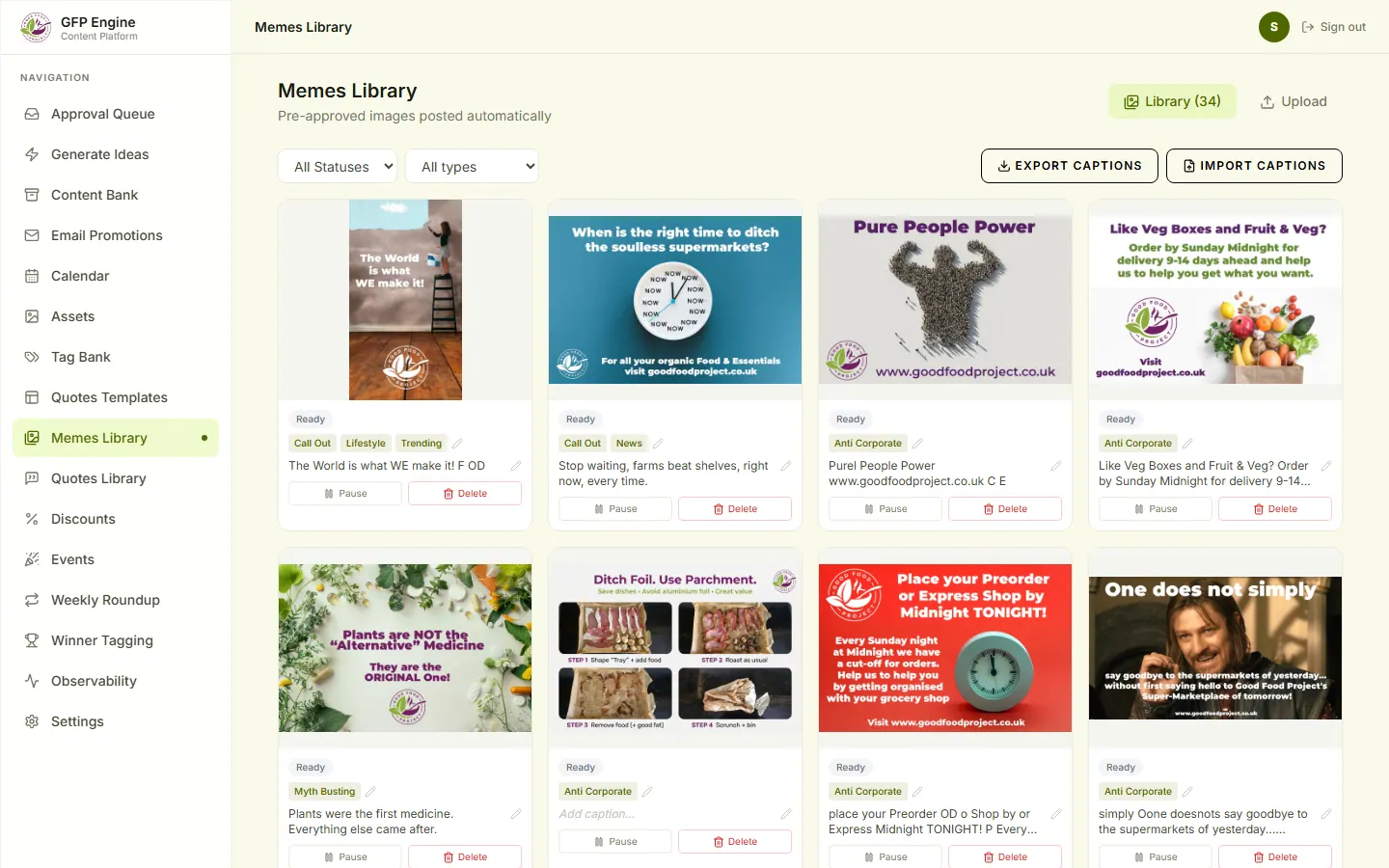
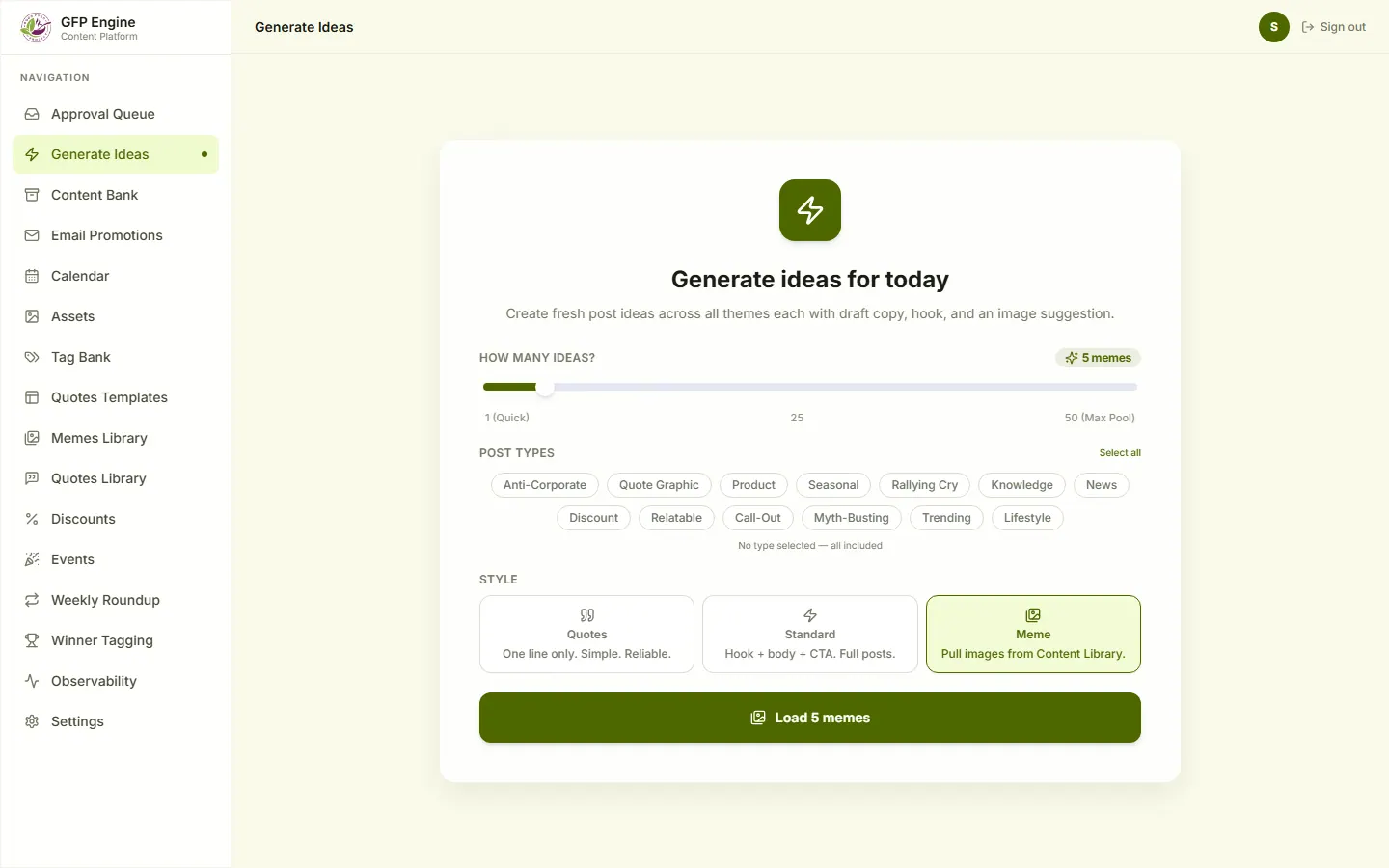
How does AI content automation work for a DTC brand?
The team writes one brief, and the system turns it into structured drafts for each platform. Before this, one idea meant separate rewrites for Facebook, Instagram, X, TikTok, WhatsApp, and email. Now the drafts are generated once, with brand rules and retrieval context baked in.
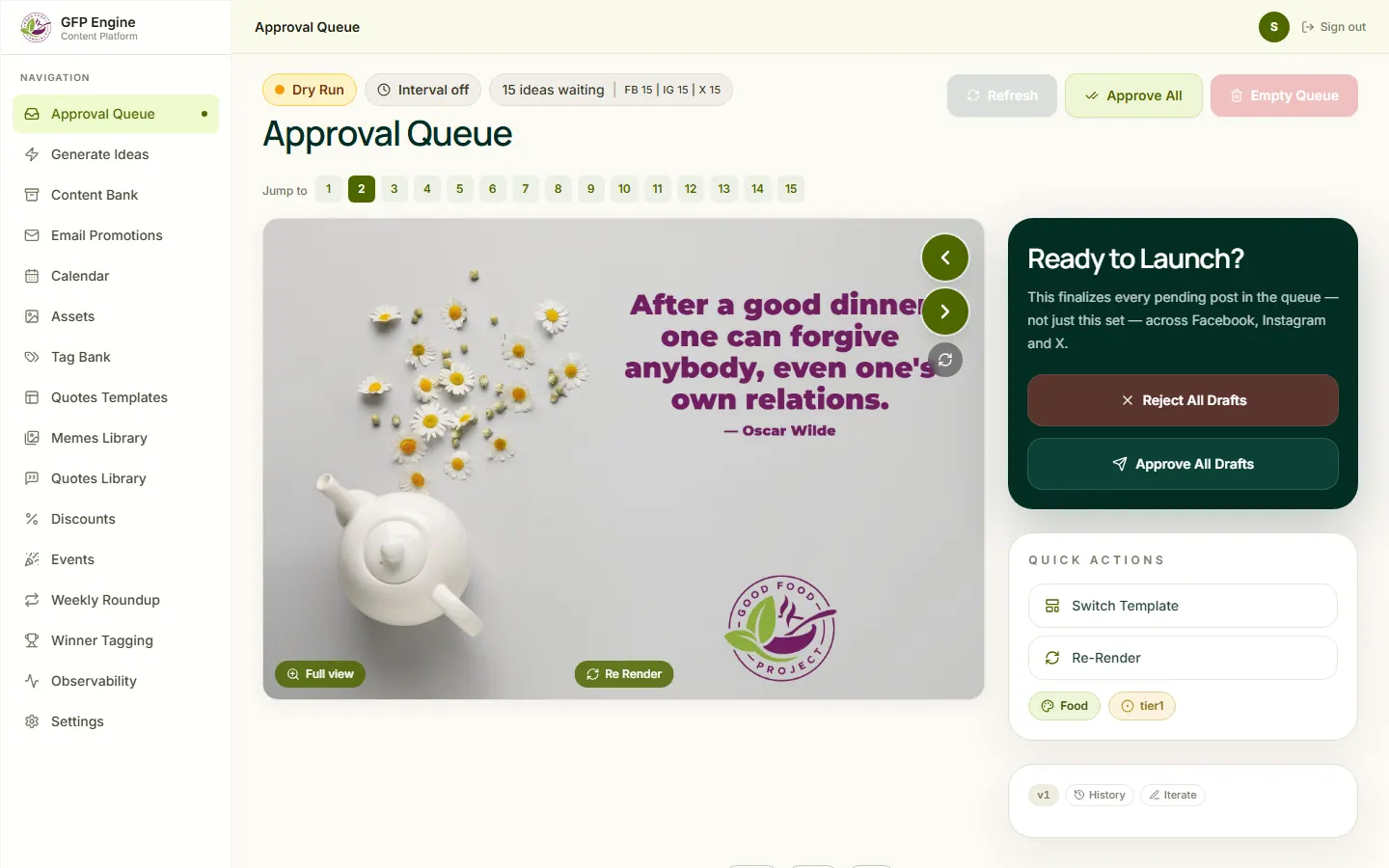
Each draft passes deterministic prelint and validation checks before a reviewer sees it. Approved posts move on to quote cards, the content calendar, and Buffer publishing. The application code, not the model, controls what gets saved and where each post sits in its lifecycle.
Can you scale content output without losing brand voice?
Yes. Reported output grew from 35 to 100 posts per week while the review standard stayed the same. Brand voice held because every draft runs through brand-aware prompting, deterministic checks, and bounded AI self-critique and repair.
The loops have hard limits. The defaults are two repair rounds, three generation rounds, and six total validation passes. And a person still approves every post, platform by platform, before it can go live.
How do you keep AI-generated content safe and on-brand?
With gates, not trust. Output is structured, and deterministic validation runs before any reviewer sees a draft. Bounded self-critique and repair fix problems the checks catch.
After that, every draft goes into a human approval queue with per-platform decisions and revision history. Only approved content can reach production, and the staging environment is isolated fail-closed from live publishing.
Which platforms does the system publish to and how?
Live publishing goes through Buffer's GraphQL API to Facebook, Instagram, and X, with call-budget accounting on every request. A reconciliation job runs every 5 minutes to keep internal state in sync and record failures for recovery.
Drafts for other destinations, like TikTok, WhatsApp, and email, are generated from the same brief inside the same approval workflow.
How production-grade is AI content automation?
This one runs like real infrastructure, not a prompt wrapper. The recorded backend test baseline is 925 tests passed. Staging and production are isolated from each other, provider fallback covers model outages, and quota budgets plus scheduled reconciliation keep publishing state honest.
Sentry and optional AgentOps give observability, including token-cost reporting, so the team can see what the AI spends.
How are branded quote cards and images handled?
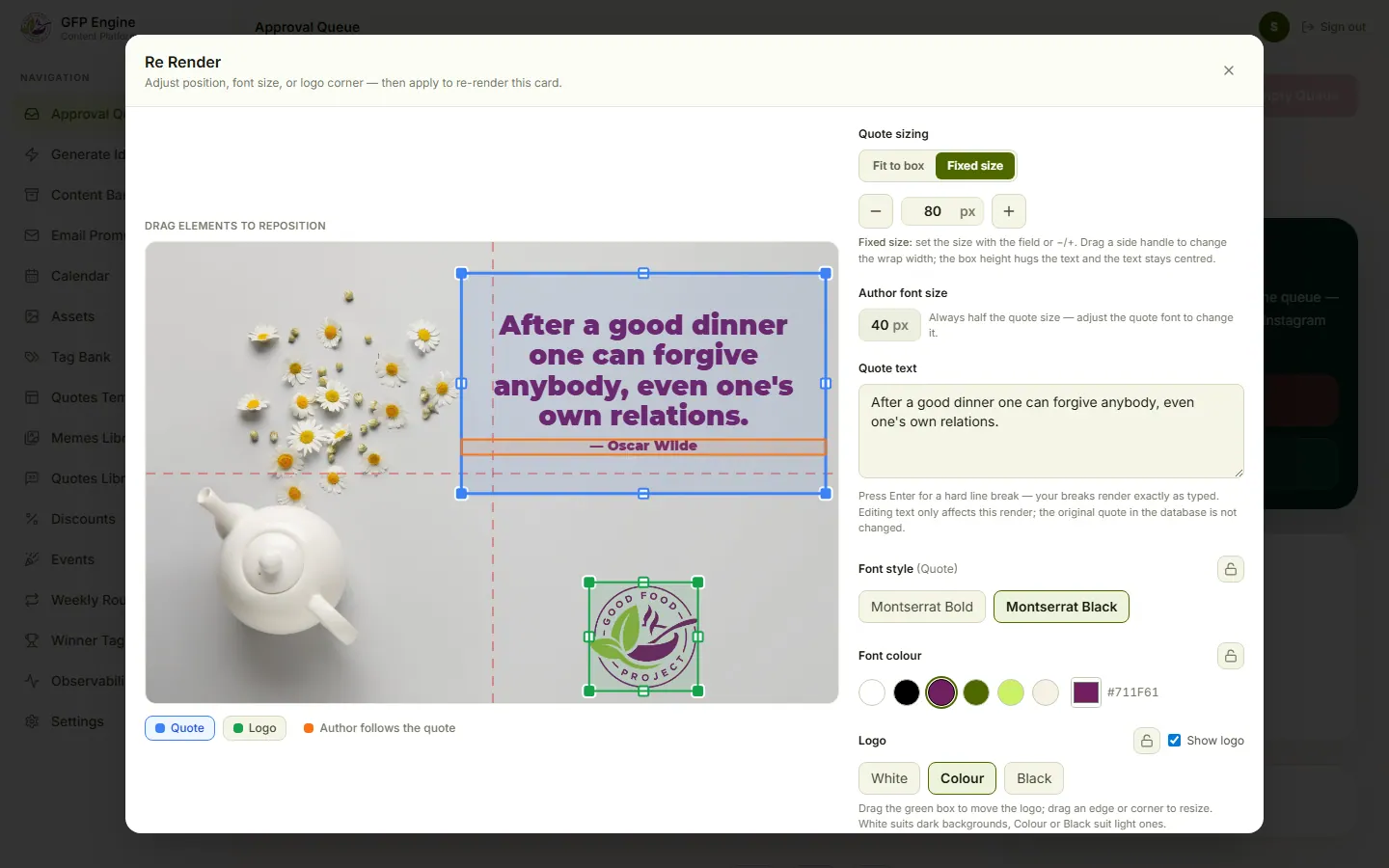
A computer-vision Safe Space workflow places text on branded quote cards. It uses OpenCV, rembg, and largest-interior-rectangle logic to find safe text areas, with an interactive Konva editor and matching browser and server rendering.
Images are verified before review, so the preview a reviewer approves matches the final render. This fixed the old preview-versus-final layout problems that risked broken posts going live.
Business Impact
The team got about 20 hours back every week while producing 65 more posts weekly.
67%
Less time on content
30 hrs/wk → 10 hrs/wk
~3x
The output
35 posts/wk → 100 posts/wk
~9x
Faster per post
~51 min → ~6 min
100%
Human-approved
Every post, platform by platform
Is an AI content engine a fit for my business?
It fits if one idea needs many platform versions and human review must stay in place. The best fits are DTC brands, agencies managing social content, and editorial teams with high content volume and an approval bottleneck.
This is the same pattern we use when we build and for clients. Book an intro call and we will map it to your workflow.